
Lakeside
Science, stewardship and a little black magic

By far the hardest part of the farm to manage is the lake - a one-acre body of water sitting quietly at the base of the valley. It forms the centrepiece of much of what we do here and, as an amenity, draws both people and wildlife in equal measure. Even this morning I saw a cabin guest in gloriously garish pyjamas standing lakeside, sharing the dawn with coots, moorhens, ducks, herons, cormorants, swans and Canada geese.
The lake was created in 1988 and is fed by three freshwater springs rising from the hillside behind it. These meander down through separate natural watercourses, principally across rewilded ground, before entering the lake via a smaller settling pond. This pond acts as a first line of defence, catching silt before it can enter the main water body. From there, the outfall leaves gently via a drainage ditch before eventually joining the River Swere.
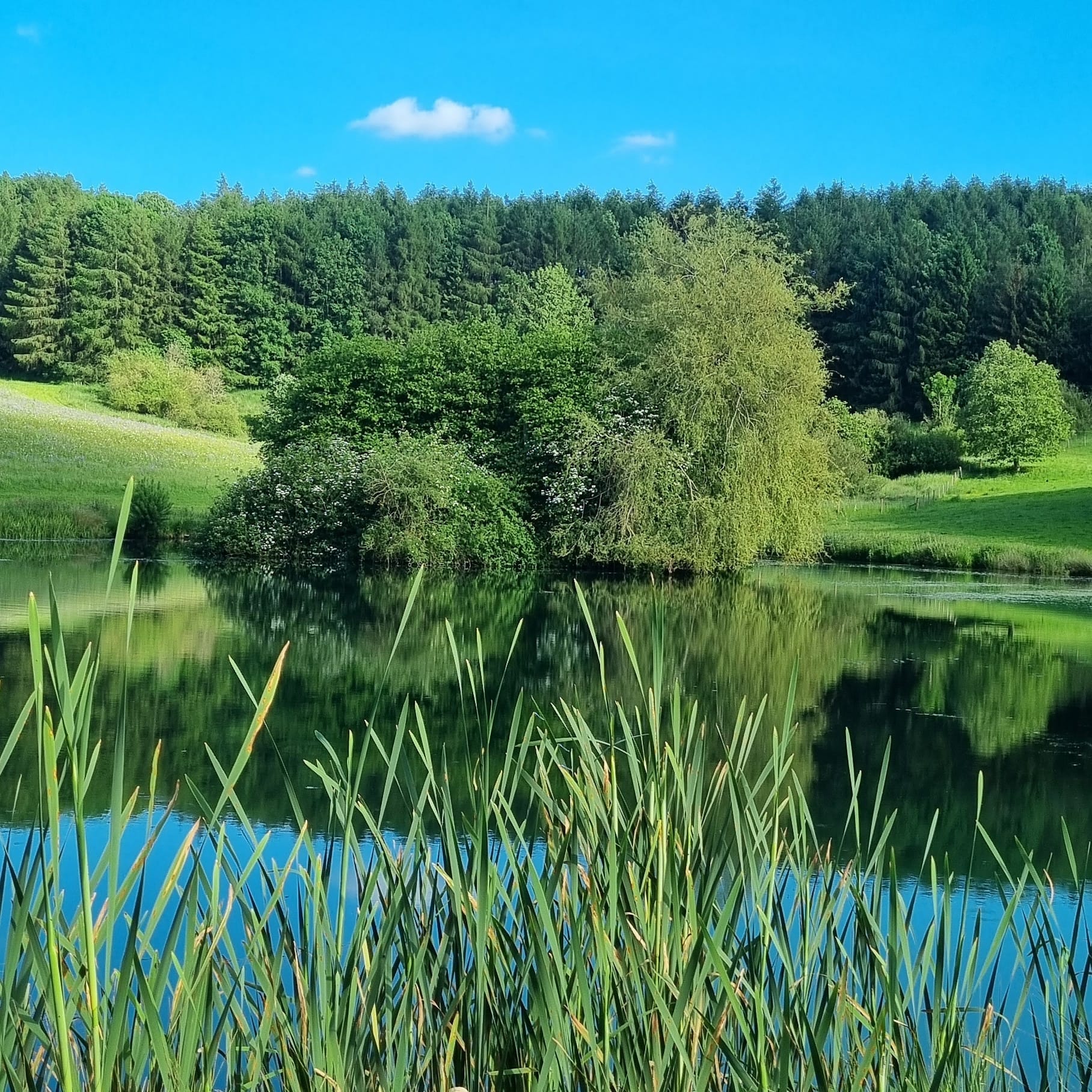
Managing the lake is a constant balancing act - weed growth, silt, oxygenation, water clarity and, of course, algae all demand attention.
This is not a fishing lake, although we do keep a small number of grass carp. They were introduced in the hope that, as herbivores, they might help control aquatic weed. In truth, they have shown remarkably little interest in the task, and I would gently suggest that much of what is written about their appetite for weed is somewhat optimistic.
I test the lake water regularly using what can best be described as a £500 “My First Chemistry Set”, allowing me to monitor pH, phosphate levels, nitrates, hardness, clarity and harmful bacteria. Aside from naturally elevated phosphate levels, the lake is remarkably healthy — largely because there is no external water supply feeding it, and therefore no risk of agricultural runoff, sewage contamination or chemical pollution. The springs rise here on the farm, and we use no chemicals on the land surrounding them.
The lake sits on a bed of Charmouth Mudstone, which naturally releases phosphates. Those phosphates, in turn, feed weed growth and create a persistent summer challenge. My main approach is to reduce nutrient availability by carefully binding phosphate with small quantities of alum - an effective treatment when used thoughtfully, this combined with manual cutting and weed removal where necessary. Fortunately, the lake’s naturally high pH (around 8.2) and very hard water provide a useful buffering effect when alum is introduced.
For silt management, I use a product called Siltex, a calcium carbonate-based treatment that helps break down organic sediment, improve water quality and support aquatic life.
To improve oxygen levels, I built my own solar-powered aeration system: four diffusers running for around six hours a day, powered by a battery, a 300W solar panel and a small pump, with garden hose and improvised leaky-hose diffusers doing much of the work. It cost a fraction of a commercial system and, gratifyingly, performs rather well.
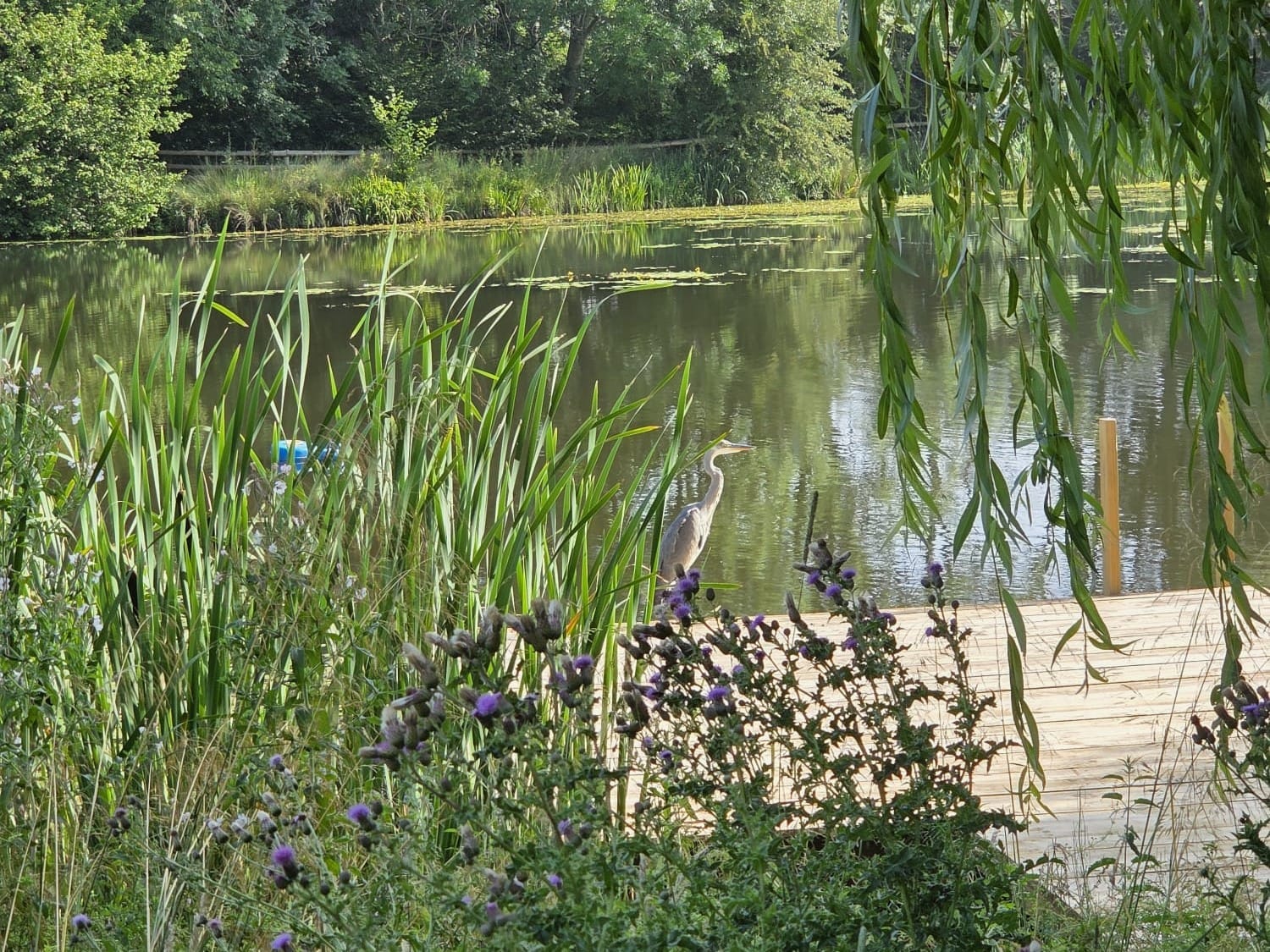
For water clarity, I use beneficial bacteria that multiply naturally and consume decaying and suspended organic matter. For algae, I favour an old but effective remedy: concentrated barley straw extract, applied early and often. Quite how it works remains something of a mystery - but it does seem to work.
None of these techniques is foolproof. Much of lake management is an odd blend of science, observation, experience and something that occasionally feels suspiciously like black magic. Weather remains the great variable. Heavy rainfall can overwhelm outlets designed for the gentler weather patterns of the late 1980s, while prolonged dry spells reduce spring flow - sometimes stopping it altogether - leaving the lake still, warm and increasingly vulnerable to imbalance.
I try to swim whenever I can, but winter is when the lake feels most alive. At dusk, I love slipping quietly into the water and swimming on into darkness. There is a curious phenomenon at that hour: wildlife seems either unaware of you, or perhaps simply willing to share the space. Deer and muntjac come down to drink, pheasants loudly dispute whose roost is whose, and as I swim in the fading light - cold sharpening every sense - I cannot help feeling that somewhere, somehow, there is more to this world than just us.