
Trees

I want to tell you about the trees we have on the farm; trees we planted, protected, replaced, thinned and pruned. Trees that have grown alongside our children and now stand as living evidence of the positive impact we have had on this small corner of Oxfordshire. I will write this piece more factually than emotionally, but I should admit at the outset that I love these trees very much.
The farm has seven acres of woodland spread across six separate compartments, as they are known in forestry. Most are relatively small areas of mixed broadleaved species, including Ash, Oak, Field Maple, Sycamore and Sweet Chestnut. The largest compartment, covering around 2.5 acres, consists predominantly of European Larch (Larix decidua) with some Ash mixed throughout.
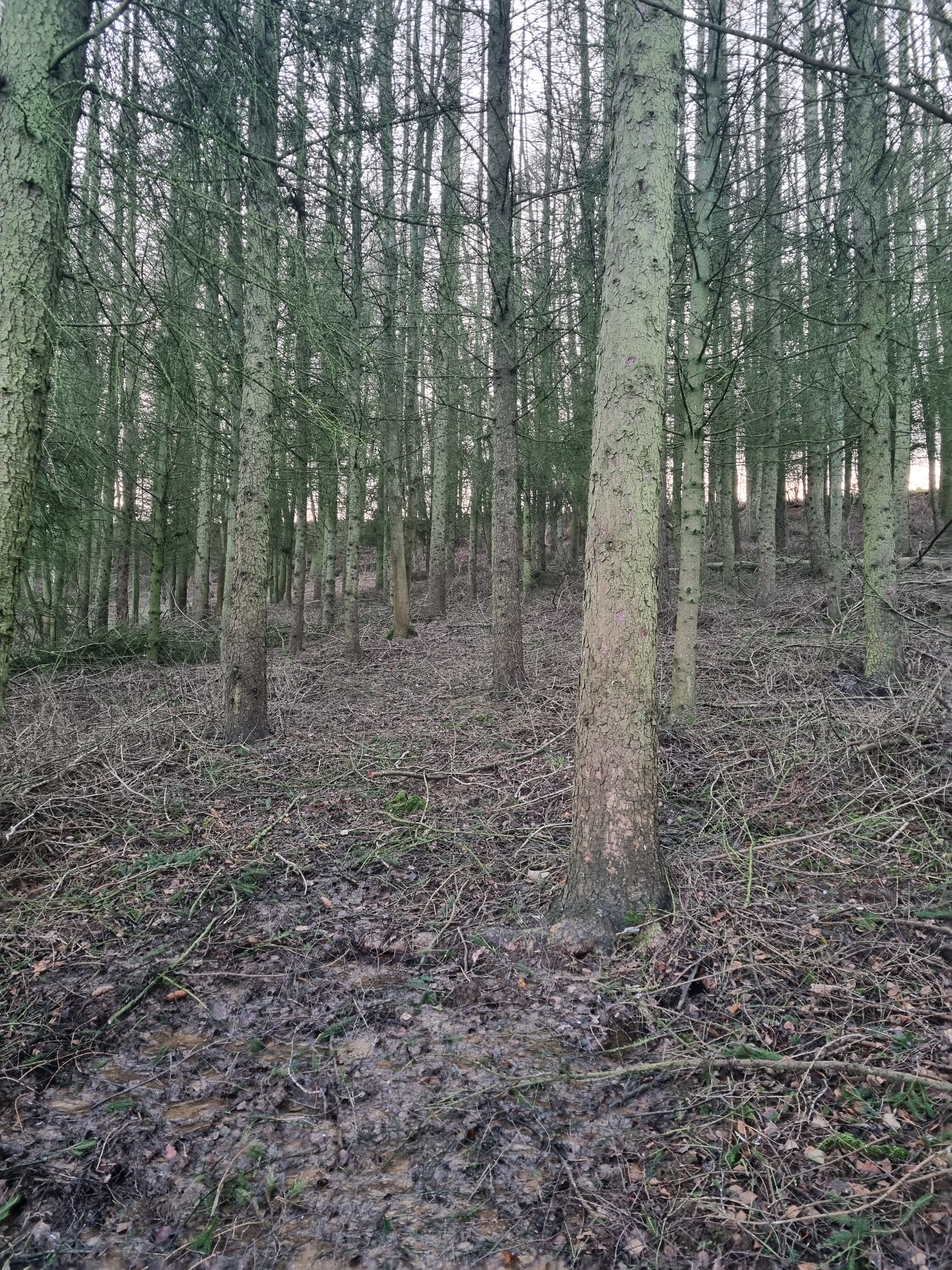
All of these woodlands were planted during the mid to late 1980s and have been carefully managed ever since. They have undergone thinning, while the Larch has benefited from both high pruning and brashing. The Larch is particularly striking. Unlike most conifers, European Larch is deciduous, shedding its needles each autumn and creating a rich tapestry of gold, copper and nut-brown tones through the winter months. On a bright January morning, with low sunlight filtering through the trunks, it is one of my favourite places on the farm.
Because much of the planting took place during the same period, there has been relatively little development of an understorey beneath the canopy. Following two exceptionally wet winters, some of the Larch root plates began to loosen, creating concerns about stability. Our plan was to thin the woodland to allow more light and space, encouraging stronger root development and improving the resilience of the remaining trees.
Then, like many woodland owners across the country, we were confronted by Ash dieback.
The disease meant our plans had to evolve. Alongside the thinning programme, we would now need to begin the gradual removal of declining Ash trees. We worked with the Forestry Commission to secure a felling licence and produced a detailed Woodland Management Plan, setting out both our approach to restoration and a long-term vision for the woodland.
The plan includes restocking with a broader range of species, including Wild Service Tree, Small-leaved Lime, Alder, Crab Apple and disease-resistant Elm. Increasing diversity feels like the right approach, particularly given how much of the original woodland relied upon Ash. A more varied woodland should be better equipped to withstand future pests, diseases and the uncertainties of a changing climate.
The management plan also sets out clear objectives for climate resilience, establishment, tree protection and wildlife enhancement. We are always happy to plan for positive outcomes and, even at my rather advanced age, the prospect of creating a vibrant new understorey is genuinely exciting. The opportunity to introduce species that were never here before, and to create richer habitat for birds, insects and mammals, makes the challenge worthwhile.
We have already made a start. Alongside the roadside is a substantial stack of timber. The higher-quality Larch will find its way to a sawmill, the Ash will become firewood, and the lower-grade material will be processed for pulp and woodchip. So far we have harvested around one hundred tonnes, with more work still to come before planting begins in the autumn.
Perhaps what makes this woodland so special to me is that it has quietly measured the passing of time.
When we planted these trees they were little more than whips protected by plastic guards. Some failed and had to be replaced. Others flourished. Year by year they gained height and character, almost without us noticing. At the same time our own lives moved on around them. Children grew up, careers changed, loved ones came and went, and the farm itself evolved. Through it all, the trees continued their steady, patient progress.
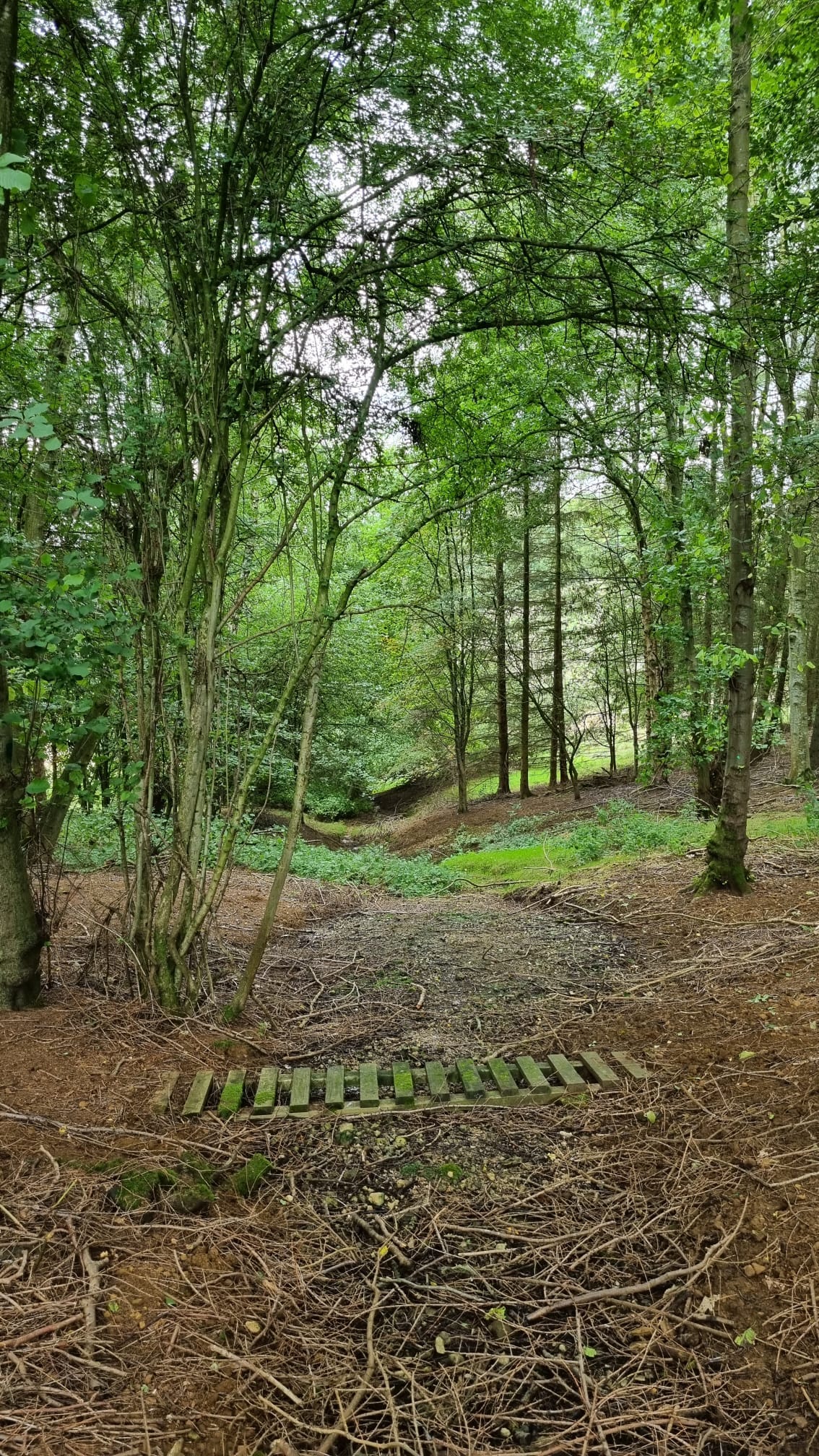
Forestry has a way of teaching humility. Trees work to a timescale that bears little relation to our own. The Oak is not concerned with next week’s weather forecast or next year’s plans. It simply grows, adding a few more rings each season and accumulating strength almost imperceptibly.
There is a certain sadness in felling a tree that you planted yourself. Even when it is necessary, and even when you know it is the right thing to do, it feels rather like saying goodbye to an old friend. Yet woodland management has always been about looking beyond the present moment. The trees we plant this autumn will provide shelter, beauty and habitat long after I am gone.
Perhaps that is why I find the prospect so encouraging. The new Wild Service Trees, Lime, Crab Apple and Elm will become part of a woodland that is more varied, more resilient and ultimately richer than the one we inherited. Someone else will walk beneath them one day and take their presence entirely for granted, just as we do with the trees planted by previous generations.
We are fortunate that the off-grid cabin brings visitors from all walks of life to the farm. Many show a genuine interest in the landscape and the conservation work taking place here. It gives us an opportunity not only to explain what we do, but also why it matters. Woodland management is often measured in decades rather than years, and some of the rewards are unlikely ever to appear on a balance sheet. Yet they are no less valuable for that.
These woods have been part of our lives for almost forty years. We planted them as young farmers with little certainty about what the future might hold. Today they stand as a reminder that worthwhile things often take time. While it is sad to lose some of the Ash, there is optimism in renewal. The woodland is entering a new chapter, and we are privileged to play a small part in writing it.
After all, that has always been the nature of forestry. You do not plant trees solely for yourself. You plant them for those who come after you.